Smart Home Selection: KNX vs Zigbee

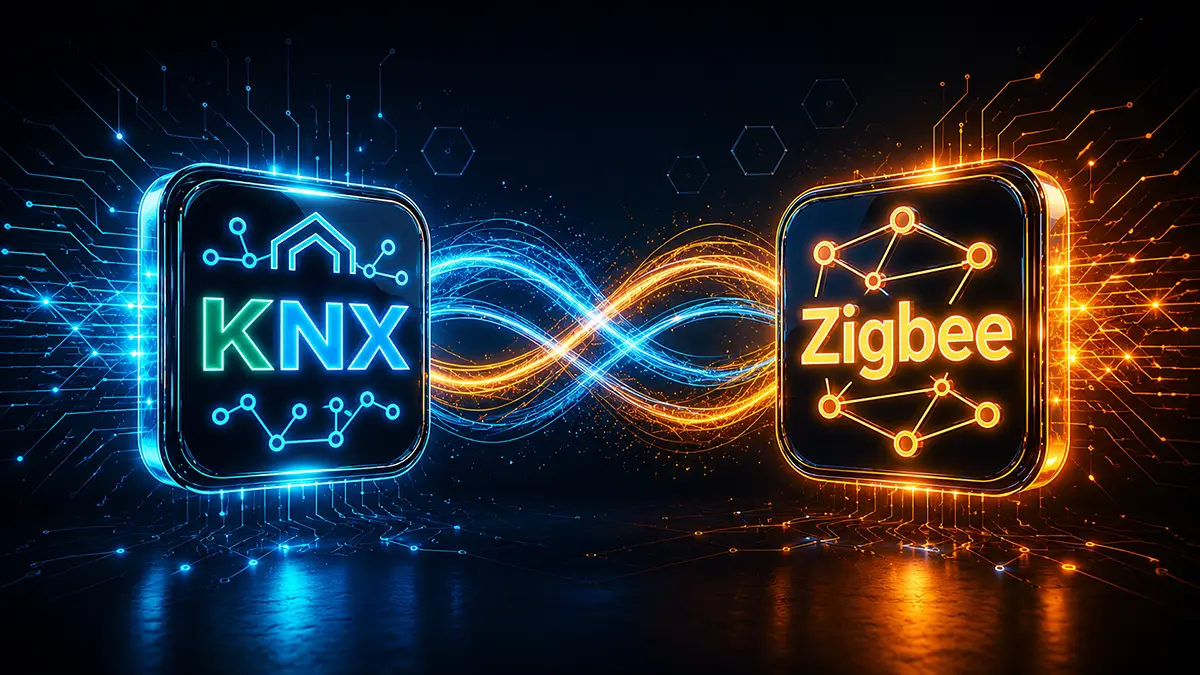
KNX and Zigbee rank as the two most widely adopted wired bus and wireless communication protocols for global building automation and premium smart home project deployment. Boasting decades of proven track record in commercial building projects, KNX stands as the industry benchmark for wired bus solutions, while Zigbee leverages its robust wireless ecosystem to dominate residential and small-to-medium commercial smart installations.

System integrators and project procurement teams frequently face tough decisions when specifying smart solutions for hotel RCU systems, luxury villa whole-home automation, and office public-area intelligent retrofits: opt for the stable wired KNX cabling architecture, or the flexible wireless Zigbee alternative? This article delivers an in-depth head-to-head comparison across five core dimensions — underlying technical principles, total project costs, applicable use cases, operational stability, and post-installation maintenance — to help you finalize protocol selection efficiently for your projects.

Part 1. Basic Definition & Core Technical Principles

1. KNX: Globally Standardized Wired Building Bus Protocol

Originated in Europe, KNX is the world’s sole international standard (EN50090) for building automation, featuring a wired communication topology powered by a dedicated 29 VDC bus cable.

  • Communication Mechanism:

All switches, actuators and sensors are daisy-chained via exclusive KNX bus wiring, immune to physical wall obstruction and RF interference.

  • Market Position:

The preferred standard for commercial buildings, star-rated hotels, large public constructions and high-end real estate developments, engineered for industrial-grade reliability.

  • Certification Requirement:

All KNX products must obtain official certification from the KNX Association. Standardized hardware enables seamless cross-brand interoperability.

2. Zigbee: Low-Power Short-Range Wireless IoT Protocol

Built on 2.4 GHz RF radio frequency and equipped with self-forming Mesh networking, Zigbee requires no pre-buried control cables and runs on regular mains power for rapid installation.

  • Communication Mechanism:

Devices build up networks through wireless signal relaying without physical wired connections.

  • Market Position:

Ideal for residential renovations, small & medium retail premises and budget-friendly refined housing, highlighted by cable-free setup and quick retrofit capability.

  • Certification Requirement:

 Products follow Zigbee Alliance certification. Cross-brand compatibility depends heavily on gateways and chipset solutions; many OEM generic devices fail to achieve interworking.

Part 2.Core Parameter Comparison Table

Comparison ItemKNX (Wired Bus)Zigbee (Wireless Mesh)
Wiring RequirementDedicated KNX bus cabling required, pre-embedded during constructionNo control wiring needed; powered by live & neutral wires
Communication StabilityImmune to walls, appliances and Wi-Fi interference, stable long-distance transmissionSignal attenuates over distance; susceptible to shielding from load-bearing walls, metal enclosures & high-power equipment
Network CapacitySingle bus supports hundreds of nodes, suitable for hierarchical networking across whole buildingsOne gateway accommodates 80~120 devices; lag & packet loss with excessive nodes
Installation CostHigh upfront cost for cables & labor; wiring done alongside civil constructionMinimum initial construction cost, ideal for renovation of existing buildings
Future ExpansionExtra wiring required for new devices, difficult retrofittingPlug-and-play addition anytime, flexible expansion
Service LifespanIndustrial-grade components, project lifespan: 15–25 yearsMostly consumer-grade hardware, average service life: 5–8 years
Typical Application5-star hotel RCU, office buildings, hospitals, airports & high-end clubsResidential houses, basic smart apartments, small retail shops & rental renovation

Part 3.Four Core Application Scenarios & Protocol Selection Guidelines

  • Scenario 1: Star-rated Hotels & Large Commercial Buildings → KNX Preferred

KNX is the top choice for hotel RCU, centralized control of public lighting, curtains and air conditioning. Systems require stable non-stop 24/7 operation and synchronous on/off of massive room devices.

Thanks to excellent anti-interference via wired connection, KNX avoids massive offline failures during partial hotel renovation, becoming the global standard for high-end hotel smart automation.

  • Scenario 2: Single-family Luxury Villas → KNX Main + Zigbee Auxiliary

Smart switches allow users to set a schedule for turning on or off lights, or manage them through intelligent scenarios. Whether it’s morning light or night security, smart switches can automatically complete these tasks, making life more intelligent.

  • Scenario 3: Regular Residential Homes & Rental Apartments / Old Renovation → Zigbee Recommended

No wall grooving & wiring needed for finished or old houses. Zigbee enables fast installation with low cost to realize basic control of lighting, curtains and smart locks with outstanding cost performance.

  • Scenario 4: Small & Medium Shops / Chain Stores → Custom KNX+Zigbee Combination

Zigbee fits single-floor small shops for better cost efficiency; KNX is prioritized for multi-floor chain malls and large commercial spaces to guarantee stable cross-area linkage.

Part 4.Common Misconceptions Correction

Misconception 1: Zigbee can fully replace KNX for large-scale projects

Wireless signals inherently suffer from attenuation. Large buildings feature numerous floors and complex wall structures, resulting in high failure rates for later-stage Zigbee networking. Subsequent maintenance costs far exceed initial wiring savings, so pure-Zigbee solutions are rarely adopted for major commercial projects.

Misconception 2: KNX is overpriced and unsuitable for home renovation

Total automation costs for individual luxury villas stay manageable. KNX delivers maintenance-free long-term operation, with lower overall 10-year lifecycle expenses compared to high-maintenance wireless alternatives.

Misconception 3: KNX and Zigbee cannot work together

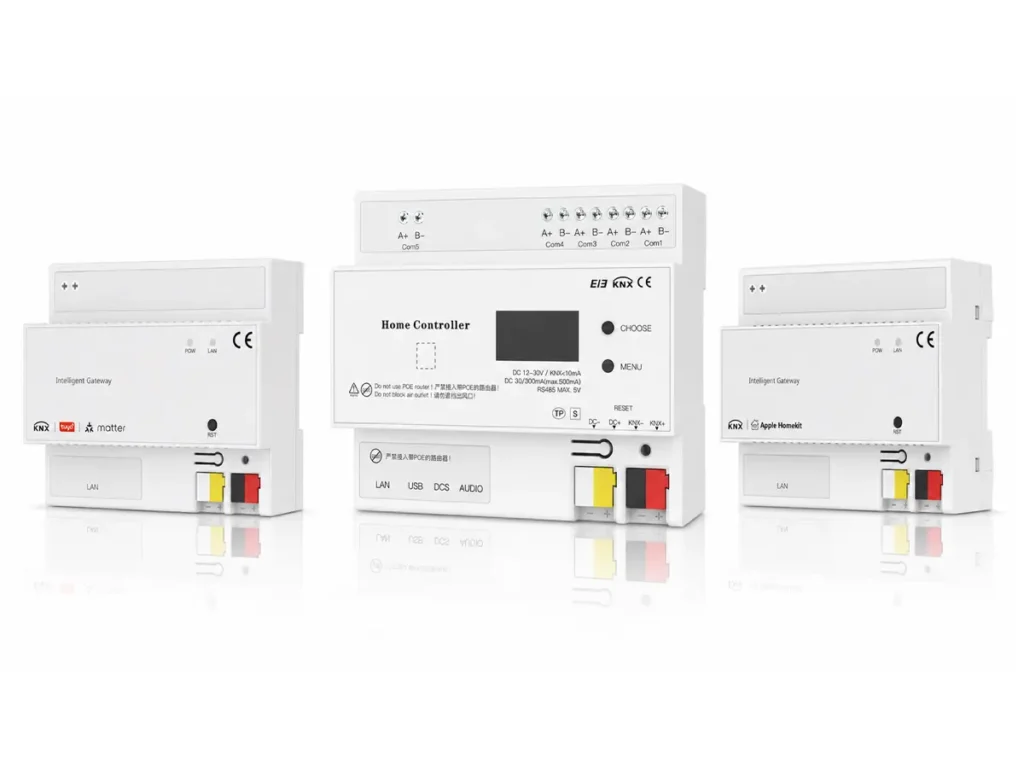
Bidirectional interconnection is achievable via KNX-Zigbee gateway. It is the mainstream hybrid solution for premium projects: KNX serves as the core main system, while Zigbee supplements newly added scattered devices.

滚动至顶部